PC oscilloscope.
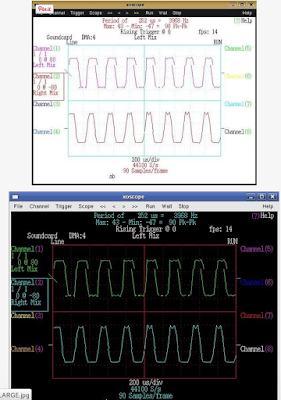
PC oscilloscope or how to save yourself hundreds of dollars before you buy an oscilloscope. Sometimes when I build simple ttl (Transistor–transistor logic) circuits I like to see the results of the output. An example would be the pwm (Pulse-width modulation) that might control a robot motor. I do not have the money to buy an oscilloscope. so I am using this project to fulfill those needs. Note I am assuming you know how to use this set up. If you are not sure, please get a professional to help. If you are unfamiliar with electronics do not do this without help of a professional. Improper probes could destroy your computer, what is connected to your computer, and as well as not be safe. Step 1: Input probe. You may want to build this input probe from the first diagram. http://nte01.nteinc.com/nte/NTExRefSemiProd.nsf/$$Search is a good place to go to get equivalent part numbers. Also included are other...
